



Author: Mohamed Sharfiras
What does a conveyancing solicitor actually do?
A conveyancing solicitor is the person who makes sure your property move is legally safe, financially secure, and properly completed. Even when a sale looks straightforward, the legal side can hide surprises that only show up in paperwork.
If you’re buying, selling, or doing both in a chain, the work of a conveyancing solicitor often decides whether the move stays calm or becomes stressful. This guide explains the process in plain UK English, with clear stages and what you should expect.
What is a conveyancing solicitor?
A conveyancing solicitor is a qualified legal professional who handles the legal transfer of ownership when property is bought or sold. Their role covers contracts, legal checks, and the secure transfer of funds.
A conveyancing solicitor doesn’t just “process forms”. They protect you from legal risks like title defects, restrictions, or unresolved disputes that can delay completion or cause major problems later.
If you want a clear view of what full legal support includes, Versus Law outlines their conveyancing services in a helpful, easy-to-scan way.
Why their role matters more than people think
Most property issues are not visible during a viewing. They’re legal, documentary, or timing-related. A conveyancing solicitor checks what you can’t realistically verify yourself.
They also keep the transaction compliant with lender requirements, which is crucial if you’re buying with a mortgage.
A solicitor guides buyers and sellers through every stage of the transaction, which you can explore in our guide on what happens during the conveyancing process in the UK.
What does a conveyancing solicitor do for buyers?
For buyers, a conveyancing solicitor focuses on protecting you from legal and financial risk before you commit. They investigate the property’s legal status and confirm that the seller has the right to sell it.
They also make sure the contract terms are fair and that nothing important is missing from the legal pack.
Typical buyer tasks include:
- Reviewing the draft contract and title documents
- Ordering legal checks and reviewing results
- Raising enquiries with the seller’s solicitor
- Checking your mortgage conditions and lender rules
- Preparing you for exchange and completion
What “legal checks” really mean in practice
A conveyancing solicitor checks things like ownership boundaries, rights of way, and restrictions that affect how you can use the property. These details can impact renovations, resale value, or even your ability to get mortgage approval.
Even in a “normal” purchase, a solicitor may identify problems that allow you to renegotiate, request fixes, or decide not to proceed.
Before looking at the solicitor’s role, it helps to understand what conveyancing actually involves when buying property.
What does a conveyancing solicitor do for sellers?
For sellers, a solicitor prepares the paperwork and responds to legal questions quickly to keep the sale moving. This is where accuracy matters, because incomplete or unclear answers can stall a buyer’s progress.
A conveyancing solicitor also manages the sale funds safely, including paying off any mortgage you still have on the property.
Typical seller tasks include:
- Drafting the contract pack and issuing legal documents
- Guiding you through property information forms
- Answering buyer enquiries clearly and promptly
- Agreeing dates for exchange and completion
- Handling mortgage redemption and sale proceeds
Why sellers can accidentally cause delays
Delays often happen when documents are missing, answers are vague, or paperwork isn’t returned on time. A good conveyancing solicitor will chase what’s needed early and help you provide clean, consistent information.

Need help with your property move?
If you’re buying, selling, or facing a complex property transaction, an experienced conveyancing solicitor can guide you through every legal step. Our team explains your position clearly, highlights risks early, and helps keep your move on track — without unnecessary stress.
Speak to a conveyancing solicitor
The key stages: offer accepted to completion
A property move isn’t one event. It’s a sequence of legal steps that must happen in the right order, with the right documents, at the right time.
A conveyancing solicitor coordinates these steps so you don’t get caught by last-minute surprises.
Typical conveyancing stages:
- Offer accepted and you instruct your solicitor
- Draft contract and legal pack received and reviewed
- Enquiries raised and answered
- Mortgage conditions confirmed (if applicable)
- Exchange of contracts
- Completion and transfer of ownership
How long does it usually take?
Timeframes vary, but delays often come from third parties: managing agents (leasehold), slow responses, missing documents, or chains. A solicitor can’t control everything, but they can remove avoidable friction by starting early and chasing firmly.
If you want a quick estimate of likely legal costs in your situation, Versus Law provides a useful conveyancing calculator.
What happens at exchange of contracts?
Exchange of contracts is the moment the transaction becomes legally binding. Before exchange, either party can usually pull out. After exchange, backing out can lead to serious penalties.
A solicitor will only recommend exchange when the legal position is clear and you’re properly protected.
What your conveyancing solicitor checks before exchange
They make sure the contract is agreed, the important enquiries are resolved, and that you understand what you’re committing to. They also confirm that mortgage and deposit arrangements are ready.
This stage is where “rushing to meet a target date” can backfire. A careful solicitor protects you from exchanging too early just to satisfy pressure from a chain or an estate agent.
Leasehold vs freehold: why leasehold takes longer
Leasehold property transactions often require extra documents and third-party involvement. That alone can add weeks if the building manager is slow or if information is incomplete.
A conveyancing solicitor will examine lease terms and ongoing costs, not just the purchase price.
What your conveyancing solicitor reviews on leasehold
They’ll look closely at service charges, ground rent, restrictions, and the remaining lease length. They’ll also review management information and whether there are disputes in the building.
This work matters because lease terms can affect resale value and mortgage options. A conveyancing solicitor is there to spot red flags before you commit.
What affects conveyancing fees?
Conveyancing costs vary depending on complexity. The price isn’t only about the solicitor’s time. It can include third-party costs and additional legal checks required by lenders or the transaction type.
Common factors that increase cost or time:
- Leasehold property or managed buildings
- New builds with tight deadlines and extra documents
- Complicated chains with multiple parties
- Title issues, missing paperwork, or legal disputes
Why very cheap quotes can be risky
Low quotes sometimes exclude important work or add fees later. A good conveyancing solicitor will be transparent about what’s included and what could change.
The goal isn’t to find the cheapest option. It’s to find a conveyancing solicitor who keeps the process safe and moving.
How to choose the right conveyancing solicitor
Choosing a conveyancing solicitor is mainly about clarity and responsiveness. In property, delays usually happen because somebody doesn’t reply, doesn’t chase, or doesn’t explain things properly.
What to look for when comparing solicitors:
- Clear pricing with minimal hidden extras
- Fast response times and regular updates
- Experience with your property type (leasehold, new build, chain)
- Strong reviews that mention speed and reliability
If you want a sense of service quality from real clients, Versus Law’s testimonials are useful for reassurance.
Final thoughts: why your conveyancing solicitor matters
A conveyancing solicitor is your legal safety net during one of the biggest financial transactions you’ll ever make. They protect your money, your legal position, and your timeline.
Even if you’re confident and organised, there are legal risks you can’t see without a trained professional. That’s why having the right conveyancing solicitor is one of the smartest decisions you can make for a smooth move.
If you’re ready to ask questions or start the process, you can contact Versus Law for guidance tailored to your situation.
Ready to move forward with confidence?
Property transactions involve critical legal details that shouldn’t be rushed or overlooked. Whether you’re purchasing your first home, selling a property, or dealing with a tight timeline, our conveyancing solicitors provide clear advice, proactive communication, and dependable legal support from start to completion.
-
Can you use the same conveyancer as the seller?

-
Additional conveyancing fees you might not expect to pay

-
What is a TA13 form? Completion information and requisitions on title explained

-
What is a TA7 leasehold information form?

-
What is a TA6 property information form?

-
What is a TA10 form?

-
What is checked during conveyancing? A complete guide

-
What salary do you need for a £300k house in the UK?

-
What is the hardest month to sell a house in the UK?

-
Who can sponsor a visa in the UK?

OTHER NEWS
What is conveyancing? A simple guide for first-time buyers
What is conveyancing? It is the legal process of transferring property ownership from the seller to the buyer. For many first-time buyers, understanding what is conveyancing helps reduce stress and avoid costly mistakes. Buying your first home is exciting, but the legal side can feel like a different language. That’s where conveyancing comes in.
What Is Conveyancing?
What is conveyancing? Conveyancing is the legal process that transfers ownership of a property from the seller to the buyer. It makes sure the property is legally “safe” to buy (for example, there aren’t hidden restrictions, boundary issues, unpaid charges, or lease problems that could affect you later).
When people ask what is conveyancing, they’re usually trying to understand two things:
- what checks happen before you’re committed, and
- how you get from “offer accepted” to “keys in hand” without nasty surprises.
Conveyancing covers the legal paperwork, the searches, the contract, the money transfer, and the final registration of you as the owner at HM Land Registry.
Who Handles Conveyancing and What Do They Do?
When people ask what is conveyancing, they are usually trying to understand who manages the legal work and why it matters. Most first-time buyers choose to work with an experienced conveyancing solicitor to handle these checks and protect their interests throughout the transaction.
Your conveyancer typically:
-
reviews the draft contract and title documents
-
orders searches (local authority, drainage, environmental, and others if needed)
-
raises enquiries with the seller’s solicitor (questions that must be answered before exchange)
-
checks your mortgage offer and acts for your lender (if you’re getting a mortgage)
-
explains key issues in plain English before you commit
-
handles exchange of contracts and sets the completion date
-
transfers the purchase money and receives confirmation you can collect keys
-
registers you as the new owner with HM Land Registry and deals with Stamp Duty (if applicable)
So if you’re still thinking what is conveyancing in practical terms: it’s the “legal safety net” that turns a handshake deal into legal ownership.
The Conveyancing Process Step-by-Step
Understanding what is conveyancing at each stage helps buyers know when they are legally committed. Below is a typical first-time buyer timeline. Some transactions move quickly, some take longer (chains, leaseholds, and slow management companies are the usual culprits).
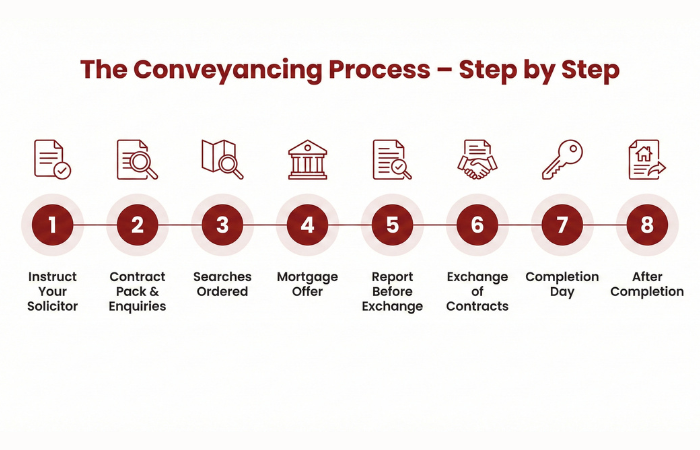
Step 1: Instruct your solicitor early
Once your offer is accepted, instruct your solicitor straight away. They’ll run ID and anti-money laundering checks and contact the seller’s solicitor for the contract pack.
During a property purchase, a solicitor handles the legal work, and you can learn more about the role of a conveyancing solicitor during a property transaction.
Step 2: Contract pack received and enquiries begin
The seller’s solicitor sends the draft contract, title information, and key property forms. Your solicitor checks everything and starts raising enquiries (for example: guarantees for building work, building regs sign-off, rights of way, boundaries, service charges, lease terms).
Step 3: Searches are ordered
Searches uncover issues you can’t see from a viewing. Common ones include:
-
Local authority search (planning permissions, enforcement notices, adopted roads)
-
Drainage and water search (sewers within boundaries, connection details)
-
Environmental search (flood risk indicators, contaminated land screening)
Depending on the location, your solicitor may recommend additional searches (mining, chancel repair, HS2/transport, etc.).
Step 4: Mortgage offer and lender requirements
If you’re buying with a mortgage, your solicitor checks the mortgage offer conditions and ensures the legal title is acceptable to the lender. This is one reason conveyancing can’t be treated as “just admin” — your lender has strict rules.
Step 5: Report to you before exchange
Once searches and enquiries are satisfactory, your solicitor will report to you. This is your chance to fully understand:
-
what you’re committing to
-
what risks exist (if any)
-
what documents you’ll be signing
-
how much money you must send and by when
Step 6: Exchange of contracts (you become legally committed)
Exchange is the point where the deal becomes legally binding. You pay your deposit (often 5–10%) and agree a fixed completion date.
This is the moment first-time buyers most need clarity, because after exchange you can’t simply “change your mind” without serious financial consequences.
Step 7: Completion day (you get the keys)
On completion, the remaining money is transferred to the seller’s solicitor. Once confirmed, the estate agent releases the keys.
Step 8: After completion (registration and final legal steps)
Your solicitor submits the Land Registry application to register you as the owner and deals with any Stamp Duty Land Tax requirements. Registration can take weeks or longer depending on Land Registry workload and transaction complexity.
If you’re new to property transactions, it helps to understand what happens during the conveyancing process in the UK step by step.
How Long Does Conveyancing Take?
Once you understand what is conveyancing, it becomes easier to see why timelines can vary. For many first-time buyers, conveyancing often takes around 8–12 weeks from offer accepted to completion, but it can be shorter or longer.
Typical reasons it takes longer:
-
a chain (multiple linked buyers/sellers)
-
slow search results from the local authority
-
leasehold paperwork delays (management packs are a common bottleneck)
-
outstanding enquiries (e.g., missing certificates, unclear boundaries)
-
mortgage offer delays or additional lender requirements
Conveyancing Costs Explained (So You Can Budget Properly)
A key part of understanding what is conveyancing is knowing which costs are legal fees and which are third-party charges. Conveyancing costs are usually split into two parts:
1) Legal fees (your solicitor’s fee)
This covers the solicitor’s professional work. Costs vary based on complexity (leasehold, new build, shared ownership, unregistered land, or a long chain can add work).
2) Disbursements (third-party costs)
These are payments your solicitor makes to others on your behalf, such as:
-
searches
-
Land Registry fees
-
bank transfer fees
-
Stamp Duty (if due)
If you’re comparing quotes, make sure you’re comparing like-for-like. A cheaper quote can sometimes exclude items that later appear as “extras”.
Freehold vs Leasehold: What First-Time Buyers Must Know

Freehold
You own the property and the land it stands on. Conveyancing is usually more straightforward.
Leasehold
You own the property for the length of the lease, but not the land. Leasehold conveyancing typically involves more checks, such as:
-
lease length (short leases can affect resale and mortgage availability)
-
ground rent terms and escalation clauses
-
service charges and planned major works
-
restrictions (pets, subletting, alterations)
-
management company performance and paperwork timelines
If you’re buying a flat, it’s often leasehold — so the conveyancing process can take longer and cost more.
Common Reasons Conveyancing Gets Delayed (And How to Reduce Them)
1. Slow responses to enquiries
If documents are missing (FENSA certificates, warranties, building regs approvals), your solicitor will ask for them. Sellers sometimes need time to locate paperwork.
What you can do: respond quickly to your solicitor, and keep pressure on the estate agent to chase the chain.
2. Searches take time
Local authorities vary widely in turnaround.
What you can do: instruct your solicitor immediately and ensure they order searches early.
3. Mortgage admin
Lenders may request extra documents, especially with gifted deposits or unusual properties.
What you can do: get your paperwork ready early (ID, deposit evidence, gifted deposit letter, bank statements).
Choosing the Right Conveyancing Solicitor as a First-Time Buyer
A first-time purchase is not the best time to gamble on poor communication. Look for:
-
clear, upfront pricing
-
a named point of contact (or a clear team structure)
-
proactive updates (not just “we’ll let you know”)
-
experience with first-time buyers and the type of property you’re buying (flat/house, leasehold/freehold)
If you’re unsure where to start, speaking to a solicitor early can help you understand timelines, costs, and potential risks before you commit.
Quick First-Time Buyer Checklist (Before You Start)
-
Have your ID and deposit evidence ready (especially if any deposit is gifted)
-
Instruct your conveyancing solicitor as soon as the offer is accepted
-
Arrange a survey early (even if the lender does a valuation)
-
Keep funds accessible for searches and the deposit
-
Reply to solicitor queries quickly to avoid avoidable delays
How Versus Law Can Help First-Time Buyers
It’s about explaining what matters, spotting issues early, and keeping the process moving with clear communication. Versus Law supports first-time buyers by handling the conveyancing process end-to-end, raising and resolving enquiries efficiently, and helping you understand the legal steps in plain English so you feel confident at each stage.
Need help with conveyancing?
Buying your first home can feel complex, especially when it comes to legal checks,
contracts, and completion timelines. Versus Law provides clear, practical conveyancing
support to help first-time buyers move forward with confidence.
-
Can you use the same conveyancer as the seller?
-
Additional conveyancing fees you might not expect to pay
-
What is a TA13 form? Completion information and requisitions on title explained
-
What is a TA7 leasehold information form?
-
What is a TA6 property information form?
-
What is a TA10 form?
-
What is checked during conveyancing? A complete guide
-
What salary do you need for a £300k house in the UK?
-
What is the hardest month to sell a house in the UK?
-
Who can sponsor a visa in the UK?
OTHER NEWS
Why you should transfer property portfolio to a limited company
To transfer property portfolio to a limited company is a decision many landlords and property investors consider as their portfolios grow. While the process involves legal, financial, and tax considerations, it can offer long-term advantages for those planning to retain, grow, or reinvest their property assets.
This structure is often explored by landlords who are affected by higher-rate income tax, restrictions on mortgage interest relief, or who want clearer financial separation between personal and investment assets. Understanding how the company structure works in practice is essential before deciding whether it is the right option.
What It Means to Transfer Property Portfolio to a Limited Company
When you transfer a property portfolio to a limited company, ownership of the properties moves from you personally to a separate legal entity. Even if you own and control the company, it is treated as distinct from you for legal and tax purposes.
In most cases, the transfer is legally treated as a sale at market value. This has implications for stamp duty land tax and capital gains tax, which should be considered carefully before proceeding. However, the change in ownership structure also alters how rental income, expenses, and profits are taxed going forward.
How Ownership Changes After the Transfer
Once the properties are owned by a limited company, rental income belongs to the company rather than to you personally. The company becomes responsible for managing income, expenses, and liabilities, and it pays corporation tax on its profits.
As a director or shareholder, you then decide how and when to extract money from the company, whether through salary, dividends, or repayment of director’s loans. This flexibility is a key reason why many landlords consider moving to a company structure.
Why the Transfer Is Treated as a Sale
HMRC treats the transfer of personally owned property to a limited company as a disposal, even if you are transferring it to a company you control. This means the transaction is assessed at market value rather than the price you choose to transfer it for.
Because of this, stamp duty land tax may be payable by the company, and capital gains tax may arise personally. While these upfront costs can be significant, they are often weighed against the long-term tax efficiency a company structure can offer.
In most cases, the ownership transfer will still require a TR1 form to legally transfer the property title.
Why Landlords Decide to Transfer Property Portfolio to a Limited Company
Many landlords decide to transfer property portfolio to a limited company when their tax position as an individual becomes less efficient. This is particularly common for higher-rate or additional-rate taxpayers and for those planning to grow their portfolio over time.
A company structure can support a more strategic, business-focused approach to property investment.
Deeper Tax Benefits of Using a Limited Company Structure
One of the most important advantages of holding property within a limited company lies in how profits and expenses are treated for tax purposes.
Corporation Tax on Profits
Rental profits earned by a limited company are subject to corporation tax rather than personal income tax. Corporation tax rates are generally lower than higher or additional rates of income tax, which can result in more profit being retained within the business.
This retained profit can then be reinvested into new properties, used to reduce borrowing, or held within the company for future use.
Full Deduction of Allowable Expenses
A limited company can deduct a wide range of legitimate business expenses from its rental income before calculating taxable profit. This typically includes:
-
Mortgage interest and finance costs
-
Property maintenance and repairs
-
Letting agent and management fees
-
Professional fees, including legal and accounting costs
-
Insurance, utilities, and compliance costs
Because these expenses are deducted in full before tax, the company’s taxable profit can be significantly lower than the gross rental income.
Mortgage Interest Relief
Unlike individual landlords, limited companies are not subject to the same restrictions on mortgage interest relief. Interest costs are treated as a business expense, reducing taxable profits directly. For leveraged portfolios, this can make a substantial difference to net returns.
Control Over When You Pay Personal Tax
When properties are held personally, rental income is taxed in the year it is earned. In contrast, a company structure allows you to control when you extract profits, helping you manage personal tax exposure more effectively.
Greater Control Over Long-Term Planning
A limited company structure allows landlords to think beyond short-term income. Retained profits can be used strategically, whether for reinvestment, portfolio expansion, or future retirement planning.
For landlords who do not rely on rental income for immediate living expenses, this control can significantly improve long-term tax efficiency.
Clearer Financial Separation
Holding property within a company creates a clearer division between personal finances and investment assets. This separation can simplify financial management and provide additional protection, as liabilities generally sit within the company rather than personally.
This approach is often preferred by landlords treating property as a business rather than a side investment.

Financial Factors to Consider Before You Transfer
Before deciding to transfer property portfolio to a limited company, it is important to understand the financial implications involved.
Upfront Costs You Need to Plan For
Transferring properties into a company can involve several upfront costs, including:
-
Stamp Duty Land Tax based on market value
-
Potential Capital Gains Tax
-
Mortgage exit fees or refinancing costs
-
Legal and conveyancing fees
These costs should be assessed against the potential long-term benefits of the new structure.
Ongoing Financial Responsibilities
Running a limited company involves ongoing administrative responsibilities. These include preparing annual accounts, submitting corporation tax returns, and maintaining statutory records.
While this adds complexity, many landlords find that the improved tax efficiency and control justify the additional administration.
Practical Considerations Beyond Tax and Cost
Tax is not the only factor to consider. Mortgage availability, lender requirements, and future exit plans should all be reviewed carefully.
Limited company buy-to-let mortgages can differ from personal mortgages in terms of rates and criteria, and refinancing may be required as part of the transfer.
Administrative Commitments
Running a company involves more administration than owning property personally. Directors must ensure filings are completed on time and records are kept correctly.
When Transferring a Property Portfolio Makes Sense
A company structure may be more suitable if you plan to hold properties long-term, reinvest profits, or grow a larger portfolio. It is often less suitable for landlords with a single property or those relying on rental income as their main personal income source.
Each situation is different, and the decision should be based on both current circumstances and future goals.
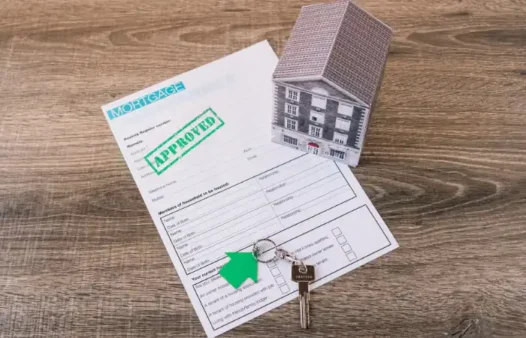
The Legal Process of Transferring a Property Portfolio
The legal process involves standard conveyancing, similar to any property sale. This includes valuation, contract preparation, mortgage arrangements, and registration with HM Land Registry.
Working with experienced solicitors helps ensure the transfer is completed correctly and in line with regulatory requirements.
Final Thoughts
To transfer property portfolio to a limited company can offer meaningful tax and structural advantages, particularly for landlords operating at scale or planning long-term growth. However, it is not a one-size-fits-all solution.
The right decision depends on your tax position, portfolio size, financing arrangements, and future plans. Professional legal and tax advice is essential to ensure the structure aligns with your objectives and avoids unintended consequences.
-
Can you use the same conveyancer as the seller?
-
Additional conveyancing fees you might not expect to pay
-
What is a TA13 form? Completion information and requisitions on title explained
-
What is a TA7 leasehold information form?
-
What is a TA6 property information form?
-
What is a TA10 form?
-
What is checked during conveyancing? A complete guide
-
What salary do you need for a £300k house in the UK?
-
What is the hardest month to sell a house in the UK?
-
Who can sponsor a visa in the UK?
OTHER NEWS
What goes in an auction legal pack?
Buying or selling property at auction is fast, legally binding, and unforgiving. Once the hammer falls, contracts are exchanged immediately — which is why understanding what goes in an auction legal pack is essential before bidding or listing a property.
An auction legal pack provides buyers with the legal information they are expected to rely on before the auction. If something is missed, the risk usually sits with the buyer, not the seller.
What Is an Auction Legal Pack?
An auction legal pack is a bundle of legal documents prepared by the seller’s solicitor for a property being sold at auction. It is usually made available online via the auctioneer’s website and forms the legal foundation of the transaction.
Unlike private treaty sales, buyers do not negotiate terms after the offer. Everything they are agreeing to is contained in the legal pack.
Is an Auction Legal Pack a Legal Requirement?
There is no strict legal rule requiring a seller to provide a full auction legal pack. However, in practice, most auction houses require one, and a property cannot realistically be sold without Special Conditions of Sale.
A minimal or poorly prepared pack often indicates unresolved legal issues. Experienced buyers treat this as a warning sign.
What Documents Are Included in an Auction Legal Pack?

While the contents vary, a professionally prepared auction legal pack in the UK will usually include the following core documents.
This documentation replaces much of the post-offer legal work typically carried out during residential conveyancing transactions.
Special Conditions of Sale
This document controls the transaction and overrides standard auction terms.
It typically confirms:
- Completion timescale (often 20–28 days)
- Whether VAT applies
- Additional costs payable by the buyer
- Occupation status
- Any overage or clawback clauses
Buyers who ignore this section often face unexpected costs or deadlines.
Title Register and Title Plan
The pack will include an Official Copy of the Register of Title and a Title Plan from HM Land Registry.
These documents confirm:
-
Legal ownership
-
Registered charges or restrictions
-
Rights of way and covenants
-
Legal boundaries of the property
Physical boundaries should never be assumed to match the legal title.
Supporting Deeds and Title Documents
If older conveyances or deeds are referred to on the title, they should be included in the legal pack. These often contain restrictions or rights that directly affect value or future use.
Missing documents here are a red flag.
Conveyancing Searches
Auction legal packs often include searches, but buyers must check whether they are current and sufficient.
Common searches include:
-
Local Authority Search
-
Drainage and Water Search
-
Environmental Search
-
Mining or ground stability reports (where relevant)
Outdated searches shift risk onto the buyer.
Property Information Forms
Depending on the property type, the pack may contain:
-
Property Information Form (TA6)
-
Fixtures and Contents Form (TA10)
-
Leasehold Information Form (TA7)
These forms disclose disputes, alterations, notices, and what is included in the sale. Ambiguous or “not known” answers should always be treated cautiously.
Lease and Tenancy Documentation
For leasehold or tenanted properties, the legal pack should include:
-
Lease agreements
-
Tenancy agreements
-
Rent details
-
Management information
-
Licences to assign or sublet
Buyers inherit tenants exactly as documented — not as verbally described.
Energy Performance Certificate (EPC)
An EPC is a legal requirement when selling property in England and Wales, including at auction. Missing EPCs can delay completion and expose sellers to penalties.
Why Reviewing an Auction Legal Pack Matters
Understanding what goes in an auction legal pack allows buyers to assess legal risk before bidding and helps sellers present a transparent, legally sound lot.
For buyers, it prevents costly surprises.
For sellers, it increases confidence, bidding activity, and completion speed.
Who Prepares an Auction Legal Pack?
Auction legal packs are usually prepared by the seller’s solicitor. However, auction transactions require specialist drafting — particularly for Special Conditions of Sale.
General conveyancing experience alone is not enough.
The legal documents included in the pack are typically reviewed by a solicitor acting for the buyer in an auction purchase.
How Versus Law Can Help
At Versus Law, our auction conveyancing solicitors advise buyers and sellers on
-
Reviewing auction legal packs before bidding
-
Identifying hidden legal and financial risks
-
Preparing compliant, buyer-ready legal packs
-
Auction-specific conveyancing strategy
In auction transactions, the legal work must be done before the hammer falls.
If you have any questions before requesting a quote, please contact us and our team will be happy to help.
-
Can you use the same conveyancer as the seller?
-
Additional conveyancing fees you might not expect to pay
-
What is a TA13 form? Completion information and requisitions on title explained
-
What is a TA7 leasehold information form?
-
What is a TA6 property information form?
-
What is a TA10 form?
-
What is checked during conveyancing? A complete guide
-
What salary do you need for a £300k house in the UK?
-
What is the hardest month to sell a house in the UK?
-
Who can sponsor a visa in the UK?