



Why is my conveyancing taking so long? The honest answer
If you feel like your conveyancing is taking so long that something must have gone wrong, you are not alone. Conveyancing is consistently the most stressful and drawn-out part of the house buying and selling process in England and Wales — and the frustration is understandable. An offer gets accepted, everyone is excited, and then weeks become months with seemingly nothing happening.
The honest answer is that most delays have identifiable causes, and most of them are fixable — or at least manageable once you understand them. This guide explains the common reasons why residential conveyancing takes longer than expected, what exchange of contracts involves and why it becomes the bottleneck, and what you can do to move things forward.
How long should conveyancing take?
A typical residential conveyancing transaction in England and Wales takes between 8 and 16 weeks from offer accepted to completion. That is a wide range, and the actual timeline depends on factors including the length of the chain, whether the property is leasehold or freehold, the complexity of the title, how quickly searches come back, and how efficiently all parties are communicating.
A chain-free freehold purchase with a straightforward title and a responsive buyer, seller, and both sets of solicitors can complete in as little as six weeks. A long chain with a leasehold property, delayed searches, or a mortgage lender that takes time to issue a formal offer can stretch well beyond four months.
If your transaction has been running for more than 12 weeks without a clear path to exchange, it is reasonable to ask your solicitor directly for a status update and a projected timeline to exchange of contracts. A good conveyancing solicitor will be able to explain exactly what is outstanding and why.
The most common reasons why conveyancing takes so long
1. Slow or complex property searches
Local authority searches are one of the most common causes of conveyancing delays. They are submitted to the local council by the buyer’s solicitor and return information about planning decisions, roads, drainage, environmental matters, and other issues affecting the property. In most areas they take two to four weeks, but in some councils the turnaround time is significantly longer — sometimes up to six weeks or more.
Where searches reveal something unexpected — a planning enforcement notice, a proposed road widening, or a drainage issue — further investigation is needed before exchange of contracts can proceed. This investigation takes time, and your solicitor cannot responsibly advise you to exchange until they have the full picture.
2. Waiting for a mortgage offer
If you are purchasing with a mortgage, the lender must issue a formal mortgage offer before exchange can happen. The lender will instruct their own valuer to assess the property, and some lenders also require additional checks depending on the property type or the applicant’s circumstances. The formal offer can take three to six weeks after the mortgage application is submitted, and any queries raised by the lender create further delays.
Leasehold properties often take longer because lenders have specific requirements around lease length, ground rent, and service charges. If the property does not meet a lender’s standard criteria, the mortgage may be declined entirely or subject to conditions that require additional legal work.
3. Leasehold enquiries and management pack delays
Leasehold transactions routinely take longer than freehold ones. The buyer’s solicitor must obtain a management pack from the freeholder or managing agent, which contains information about ground rent, service charges, the building’s maintenance history, and any pending major works. Managing agents are under no strict legal obligation to respond quickly, and delays of four to six weeks are common.
Once received, the pack itself may raise further questions — unexplained service charge arrears, a recent section 20 notice for major works, or insurance arrangements that need clarification. Each of these requires additional enquiries, and the conveyancing taking so long in leasehold transactions is largely driven by this back-and-forth.
4. Seller’s solicitor delays
Not all delays originate with the buyer. If the seller’s solicitor is slow to raise a contract or respond to enquiries, the whole transaction stalls. This can happen when a firm has too many files, when a key solicitor goes on leave, or when the seller is unresponsive to queries from their own solicitor.
Seller-side delays are particularly frustrating because you have limited direct influence over them. The most effective approach is for your solicitor to maintain regular contact with the seller’s solicitor and for the estate agent to keep pressure on the seller when necessary. If the delay is clearly attributable to the seller’s legal team, it is worth raising this with the estate agent directly.
5. Chain dependencies
If your purchase is part of a chain — where your seller is also buying elsewhere, and their seller is buying elsewhere, and so on — the entire chain must be ready to exchange at the same time. Every property and every buyer in the chain must have their legal work completed, their mortgage offer in hand, and their solicitor ready to exchange before a date can be set.
A single property at any point in the chain can hold everything up. The chain is only as fast as its slowest participant. If you are several transactions deep in a long chain, some delay is essentially inevitable, and it has nothing to do with your own solicitor’s performance.
6. Enquiries taking time to resolve
During residential conveyancing, the buyer’s solicitor raises a series of enquiries with the seller’s solicitor — questions about the title, boundaries, planning history, disputes, and anything else that requires clarification. The seller, not the solicitor, is usually the one who must provide the answers, and sellers do not always respond promptly.
Some enquiries are routine and are resolved quickly. Others require documents to be tracked down, indemnity insurance to be arranged, or historical planning issues to be investigated. Each unresolved enquiry is a reason why exchange of contracts cannot proceed, so the sooner sellers provide complete answers, the faster the process moves.
7. Title defects and legal complications
Sometimes the delay is genuinely unavoidable because there is a problem with the property’s legal title. Missing planning consents, restrictive covenants that have been breached, boundary disputes, or unregistered land can all create significant additional work. Your solicitor has a professional duty to flag these issues and ensure they are resolved before advising you to exchange.
In most cases, title defects are resolved through indemnity insurance, which covers the buyer against the risk that the defect is ever enforced. Arranging this insurance takes additional time, and the insurer may require information or documentation before agreeing to provide cover.

Is your transaction feeling stuck?
Our residential conveyancing team handles transactions across England and Wales, with proactive case management and regular updates built in as standard. If your current conveyancing is taking so long that you’re losing confidence, we’re happy to have an honest conversation about your options. Get a free conveyancing quote in minutes and see what properly-managed conveyancing looks like.
What can you do to speed up conveyancing?
While some delays are genuinely outside anyone’s control, there are concrete steps buyers and sellers can take to reduce unnecessary waiting.
Instruct a solicitor before or as soon as your offer is accepted
Many buyers wait until after their offer is accepted to think about a solicitor. Instructing a firm of residential conveyancing solicitors immediately — or even before making an offer if you are close to agreeing a sale — means your ID checks, client care documentation, and initial searches can be submitted without delay.
Get your mortgage application submitted quickly
Once an offer is accepted, apply to your lender formally rather than waiting for searches to come back first. The mortgage application and the legal work can run in parallel. Any delay in starting the mortgage application is a delay in receiving the formal offer, which in turn delays exchange of contracts.
Respond promptly to your solicitor’s requests
Every time your solicitor asks you for a document, a decision, or a signature, clock the turnaround. Many conveyancing delays happen because clients take days or weeks to respond to routine requests. Treat your solicitor’s correspondence as a priority, because unanswered queries create a queue that holds up the whole transaction.
Chase the estate agent, not just the solicitor
Estate agents have a powerful role in keeping transactions moving. If the seller’s solicitor is slow, a call from the estate agent to chase progress is often more effective than a solicitor-to-solicitor request. Agents want the sale to complete, and the good ones are proactive in managing chains and identifying blockages.
Agree a target exchange date early in the process
Establishing a target exchange date with all parties — even an approximate one — creates shared momentum. It gives solicitors something to work towards and makes it easier to identify which party is holding things up. If your transaction has been running for several weeks without anyone mentioning an exchange date, raise it proactively.
Choose a conveyancing solicitor with a demonstrable track record
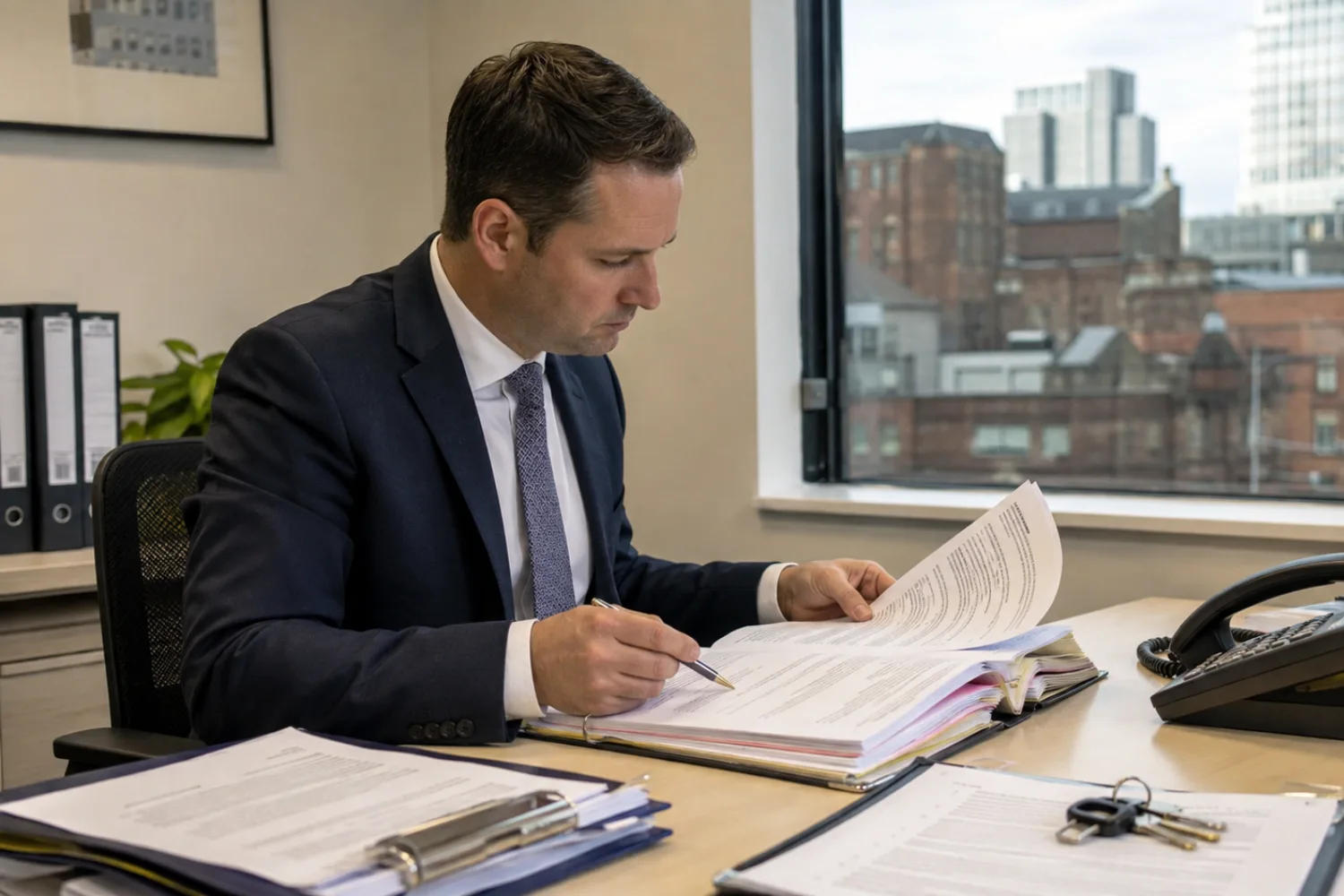
The quality of your solicitor has a genuine impact on your experience. Firms that are accredited under the Law Society Conveyancing Quality Scheme have demonstrated that they meet recognised standards for residential conveyancing practice. At Versus Law, our Manchester team has completed over 10,000 exchanges and holds CQS accreditation.
When should you consider switching solicitors?
Switching solicitors mid-transaction is a significant step and one not to take lightly. It will cause a further delay while the new firm reviews the file and gets up to speed. In most cases, working with your existing solicitor to resolve the specific problem is more effective than starting again.
The exceptions are where your solicitor is genuinely uncontactable, consistently failing to respond to your queries or the other side’s enquiries, has made a clear error that is causing the delay, or where you have received advice that another solicitor considers incorrect. In those circumstances, switching may be justified despite the short-term disruption.
If you are considering moving your file or simply want an independent view on whether your transaction is progressing at a reasonable pace, our team is happy to have that conversation. There is no obligation involved in getting a second opinion.
Get your conveyancing moving
If your residential conveyancing is taking so long that you are losing patience, or if you are approaching a new transaction and want solicitors who prioritise clear communication and fast turnarounds, Versus Law’s conveyancing team is here to help. Fixed fees, dedicated solicitor, and updates via phone, email, or WhatsApp throughout.
-
What does a conveyancing solicitor do during a property purchase?

-
What happens on exchange of contracts?

-
What’s the difference between exchange of contracts and completion?

-
What you need to know about buying a property jointly

-
Can you use the same conveyancer as the seller?

-
Additional conveyancing fees you might not expect to pay

-
What is a TA13 form? Completion information and requisitions on title explained

-
What is a TA7 leasehold information form?

-
What is a TA6 property information form?

-
What is a TA10 form?