


Mould? What Mould? The AI Photos Fooling UK Home Buyers
You spot it on Rightmove. A bright, airy kitchen. Fresh white walls. A cosy lounge with a sofa you would happily sink into. You book a viewing, take time off work and drive across town.
Then the door opens. The walls are stained with damp. There is black mould creeping across the bathroom ceiling. The kitchen units are hanging off their hinges.
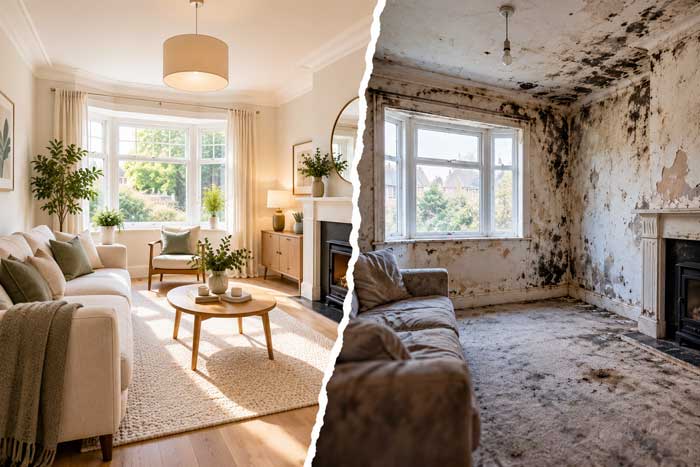
Welcome to the new world of AI-edited property listings. Buyers across the UK are reporting that the homes they view look nothing like the photos online. Somewhere near the bottom of the description, often well below the fold, sits a small line admitting that some images have been “enhanced” or “staged using AI”.
What is actually going on?
AI image tools can now take a photo of a tired, empty room and transform it in seconds. They can add furniture, brighten the light, swap a grey sky for a blue one, and smooth over walls and floors. Some agents use them to “virtually stage” empty homes. Others go further.
This is not a fringe issue. In 2025, a Daily Mail investigation found several estate agencies using AI to fill empty rooms and enhance photos, with some bizarre results. These included flooring running into a fireplace, a front door with no handle and furniture with no reflection in the mirror. One agent openly admitted that most agencies now have some properties “helped by AI”.
In June 2026, The Times reported on a London flat where a buyer said the property looked noticeably different in person. The agency later accepted that an AI-edited image had removed a chimney breast and that some rooms looked larger than they really were. In another listing, the AI disclaimer was printed in white text on a white background in the brochure, effectively invisible to anyone reading it.
It is not just a UK problem either. Buyers in the US and Ireland have raised the same complaints, and Ireland’s Tánaiste has publicly described AI-edited listing photos as misleading and a waste of buyers’ time.
Virtual staging is one thing. Hiding defects is another
Adding a digital sofa to an empty living room can help buyers picture a home. Few people would object to that if it is clearly labelled.
The real problem starts when AI is used to change the condition of the property itself. Buyers are now reporting listings where:
- Damp patches and water stains have disappeared from walls and ceilings
- Black mould in bathrooms and bedrooms has been painted out
- Broken or dated kitchens look new and intact
- Cracked plaster and damaged floors appear smooth and spotless
- Rooms look bigger than they really are
These are not cosmetic details. Damp, mould and structural damage can cost thousands to put right, and they can affect your mortgage, your insurance and your health.
The disclaimer buried at the bottom
Many agents protect themselves with a disclaimer such as “some images have been enhanced using AI”. But too often it is tucked away at the end of a long description, where most people never scroll. The photos are the first thing every buyer sees. The disclaimer is the last.
The result? Wasted journeys, wasted time off work and wasted hopes. Consumer group Which? has warned that the practice could cost buyers time and money travelling to viewings of homes that look nothing like they do online.
Is it legal?
There is no specific law banning AI images in property adverts. But that does not mean anything goes.
Estate agents must follow consumer protection law, which is now set out in the Digital Markets, Competition and Consumers Act 2024. In simple terms, agents must not mislead buyers, whether through false information, a misleading overall impression or leaving out important details. A small disclaimer does not automatically put right a misleading photo if the overall impression is still false.
Agents also have to give buyers “material information” about a property, meaning the facts a buyer needs to make an informed decision. Known problems such as serious damp or structural issues can fall into this category.
Industry bodies are clear on where the line sits. Propertymark has said AI should never be used to alter a property’s condition or key features, and that any AI-created or altered image must be clearly labelled. The Guild of Property Professionals has stressed that agents remain responsible for their marketing, whether a person or an AI tool created it.
In short, an agent who uses AI to hide damp, mould or damage, and relies on a buried disclaimer, could be taking a serious risk.
How to spot an AI-edited property listing
Before you book a viewing, run through this quick checklist:
- Read the whole description. Scroll right to the bottom and look for words like “AI”, “enhanced”, “virtually staged” or “for illustrative purposes”.
- Look for things that don’t add up. Furniture with no reflection, doors with no handles, curtains with no rails, odd shadows or objects that blend into walls are all tell-tale signs.
- Check the floor plan. If the rooms look much bigger in the photos than the measurements suggest, be suspicious.
- Compare with older listings. Many properties have been listed before. Search the address online to find older photos.
- Use Google Street View. Check the outside of the property and the street match what the listing shows.
- Ask for unedited photos or a video tour. A genuine agent should be happy to share them.
- Ask direct questions. Ask the agent in writing whether any photos have been edited, and whether there are any known issues with damp, mould or the kitchen.
What to do if a listing misled you
If you have viewed a property that looked nothing like its advert, you do not have to just shrug it off.
- Keep evidence. Take screenshots of the listing and photos before they are changed or removed, and note the date.
- Complain to the agent. Put your concerns in writing and ask for a response through their formal complaints process.
- Report it to the property portal. Rightmove and Zoopla both let you report listings you believe are inaccurate.
- Escalate to a redress scheme. Every estate agent must belong to an approved redress scheme, such as The Property Ombudsman or the Property Redress Scheme. If the agent’s response does not resolve things, you can complain there.
- Contact Trading Standards. You can report potentially misleading adverts through the Citizens Advice consumer helpline, which passes reports to Trading Standards.
Photos can lie. Surveys and solicitors don’t
If you do fall for a property and make an offer, the photos should never be the last word on its condition. That is where proper checks come in.
- Get an independent survey. A RICS Level 2 or Level 3 survey will pick up damp, mould, structural issues and other defects that no photo filter can hide.
- Use an experienced conveyancing solicitor. Your conveyancing solicitor will review the seller’s property information forms, raise enquiries about any issues and order searches, so you know exactly what you are buying before you commit.
- Don’t rush. If something feels wrong, ask questions before exchange of contracts. Once you exchange, the purchase is legally binding.
Buying a home? Get a free conveyancing quote
At Versus Law Solicitors, our conveyancing team works to protect buyers at every stage of the process. We ask the questions that matter, so you are not relying on a filtered photo.
Found a property you love? Get your free conveyancing quote today and let our conveyancing solicitors make sure it is everything it seems.
-
What is the biggest mistake in a will?

-
Common conveyancing fees explained

-
Are conveyancing fees based on property value?

-
What does a conveyancing solicitor do during a property purchase?

-
What happens on exchange of contracts?

-
What’s the difference between exchange of contracts and completion?

-
What you need to know about buying a property jointly

-
Why is my conveyancing taking so long? The honest answer

-
Can you use the same conveyancer as the seller?

-
Additional conveyancing fees you might not expect to pay