



What is conveyancing? A simple guide for first-time buyers
What is conveyancing? It is the legal process of transferring property ownership from the seller to the buyer. For many first-time buyers, understanding what is conveyancing helps reduce stress and avoid costly mistakes. Buying your first home is exciting, but the legal side can feel like a different language. That’s where conveyancing comes in.
What Is Conveyancing?
What is conveyancing? Conveyancing is the legal process that transfers ownership of a property from the seller to the buyer. It makes sure the property is legally “safe” to buy (for example, there aren’t hidden restrictions, boundary issues, unpaid charges, or lease problems that could affect you later).
When people ask what is conveyancing, they’re usually trying to understand two things:
- what checks happen before you’re committed, and
- how you get from “offer accepted” to “keys in hand” without nasty surprises.
Conveyancing covers the legal paperwork, the searches, the contract, the money transfer, and the final registration of you as the owner at HM Land Registry.
Who Handles Conveyancing and What Do They Do?
When people ask what is conveyancing, they are usually trying to understand who manages the legal work and why it matters. Most first-time buyers choose to work with an experienced conveyancing solicitor to handle these checks and protect their interests throughout the transaction.
Your conveyancer typically:
-
reviews the draft contract and title documents
-
orders searches (local authority, drainage, environmental, and others if needed)
-
raises enquiries with the seller’s solicitor (questions that must be answered before exchange)
-
checks your mortgage offer and acts for your lender (if you’re getting a mortgage)
-
explains key issues in plain English before you commit
-
handles exchange of contracts and sets the completion date
-
transfers the purchase money and receives confirmation you can collect keys
-
registers you as the new owner with HM Land Registry and deals with Stamp Duty (if applicable)
So if you’re still thinking what is conveyancing in practical terms: it’s the “legal safety net” that turns a handshake deal into legal ownership.
The Conveyancing Process Step-by-Step
Understanding what is conveyancing at each stage helps buyers know when they are legally committed. Below is a typical first-time buyer timeline. Some transactions move quickly, some take longer (chains, leaseholds, and slow management companies are the usual culprits).
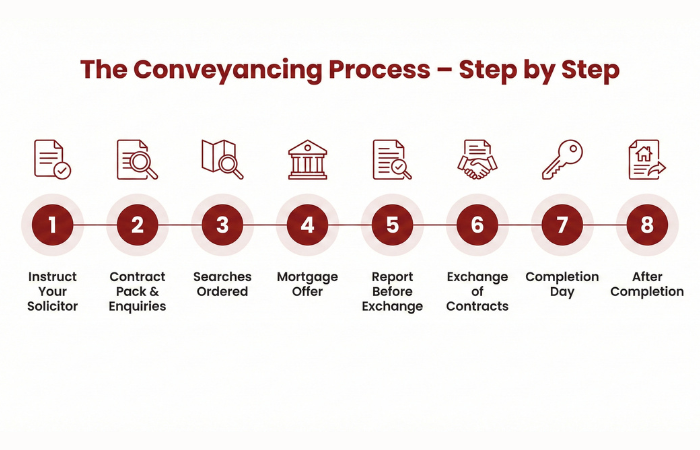
Step 1: Instruct your solicitor early
Once your offer is accepted, instruct your solicitor straight away. They’ll run ID and anti-money laundering checks and contact the seller’s solicitor for the contract pack.
During a property purchase, a solicitor handles the legal work, and you can learn more about the role of a conveyancing solicitor during a property transaction.
Step 2: Contract pack received and enquiries begin
The seller’s solicitor sends the draft contract, title information, and key property forms. Your solicitor checks everything and starts raising enquiries (for example: guarantees for building work, building regs sign-off, rights of way, boundaries, service charges, lease terms).
Step 3: Searches are ordered
Searches uncover issues you can’t see from a viewing. Common ones include:
-
Local authority search (planning permissions, enforcement notices, adopted roads)
-
Drainage and water search (sewers within boundaries, connection details)
-
Environmental search (flood risk indicators, contaminated land screening)
Depending on the location, your solicitor may recommend additional searches (mining, chancel repair, HS2/transport, etc.).
Step 4: Mortgage offer and lender requirements
If you’re buying with a mortgage, your solicitor checks the mortgage offer conditions and ensures the legal title is acceptable to the lender. This is one reason conveyancing can’t be treated as “just admin” — your lender has strict rules.
Step 5: Report to you before exchange
Once searches and enquiries are satisfactory, your solicitor will report to you. This is your chance to fully understand:
-
what you’re committing to
-
what risks exist (if any)
-
what documents you’ll be signing
-
how much money you must send and by when
Step 6: Exchange of contracts (you become legally committed)
Exchange is the point where the deal becomes legally binding. You pay your deposit (often 5–10%) and agree a fixed completion date.
This is the moment first-time buyers most need clarity, because after exchange you can’t simply “change your mind” without serious financial consequences.
Step 7: Completion day (you get the keys)
On completion, the remaining money is transferred to the seller’s solicitor. Once confirmed, the estate agent releases the keys.
Step 8: After completion (registration and final legal steps)
Your solicitor submits the Land Registry application to register you as the owner and deals with any Stamp Duty Land Tax requirements. Registration can take weeks or longer depending on Land Registry workload and transaction complexity.
If you’re new to property transactions, it helps to understand what happens during the conveyancing process in the UK step by step.
How Long Does Conveyancing Take?
Once you understand what is conveyancing, it becomes easier to see why timelines can vary. For many first-time buyers, conveyancing often takes around 8–12 weeks from offer accepted to completion, but it can be shorter or longer.
Typical reasons it takes longer:
-
a chain (multiple linked buyers/sellers)
-
slow search results from the local authority
-
leasehold paperwork delays (management packs are a common bottleneck)
-
outstanding enquiries (e.g., missing certificates, unclear boundaries)
-
mortgage offer delays or additional lender requirements
Conveyancing Costs Explained (So You Can Budget Properly)
A key part of understanding what is conveyancing is knowing which costs are legal fees and which are third-party charges. Conveyancing costs are usually split into two parts:
1) Legal fees (your solicitor’s fee)
This covers the solicitor’s professional work. Costs vary based on complexity (leasehold, new build, shared ownership, unregistered land, or a long chain can add work).
2) Disbursements (third-party costs)
These are payments your solicitor makes to others on your behalf, such as:
-
searches
-
Land Registry fees
-
bank transfer fees
-
Stamp Duty (if due)
If you’re comparing quotes, make sure you’re comparing like-for-like. A cheaper quote can sometimes exclude items that later appear as “extras”.
Freehold vs Leasehold: What First-Time Buyers Must Know

Freehold
You own the property and the land it stands on. Conveyancing is usually more straightforward.
Leasehold
You own the property for the length of the lease, but not the land. Leasehold conveyancing typically involves more checks, such as:
-
lease length (short leases can affect resale and mortgage availability)
-
ground rent terms and escalation clauses
-
service charges and planned major works
-
restrictions (pets, subletting, alterations)
-
management company performance and paperwork timelines
If you’re buying a flat, it’s often leasehold — so the conveyancing process can take longer and cost more.
Common Reasons Conveyancing Gets Delayed (And How to Reduce Them)
1. Slow responses to enquiries
If documents are missing (FENSA certificates, warranties, building regs approvals), your solicitor will ask for them. Sellers sometimes need time to locate paperwork.
What you can do: respond quickly to your solicitor, and keep pressure on the estate agent to chase the chain.
2. Searches take time
Local authorities vary widely in turnaround.
What you can do: instruct your solicitor immediately and ensure they order searches early.
3. Mortgage admin
Lenders may request extra documents, especially with gifted deposits or unusual properties.
What you can do: get your paperwork ready early (ID, deposit evidence, gifted deposit letter, bank statements).
Choosing the Right Conveyancing Solicitor as a First-Time Buyer
A first-time purchase is not the best time to gamble on poor communication. Look for:
-
clear, upfront pricing
-
a named point of contact (or a clear team structure)
-
proactive updates (not just “we’ll let you know”)
-
experience with first-time buyers and the type of property you’re buying (flat/house, leasehold/freehold)
If you’re unsure where to start, speaking to a solicitor early can help you understand timelines, costs, and potential risks before you commit.
Quick First-Time Buyer Checklist (Before You Start)
-
Have your ID and deposit evidence ready (especially if any deposit is gifted)
-
Instruct your conveyancing solicitor as soon as the offer is accepted
-
Arrange a survey early (even if the lender does a valuation)
-
Keep funds accessible for searches and the deposit
-
Reply to solicitor queries quickly to avoid avoidable delays
How Versus Law Can Help First-Time Buyers
It’s about explaining what matters, spotting issues early, and keeping the process moving with clear communication. Versus Law supports first-time buyers by handling the conveyancing process end-to-end, raising and resolving enquiries efficiently, and helping you understand the legal steps in plain English so you feel confident at each stage.
Need help with conveyancing?
Buying your first home can feel complex, especially when it comes to legal checks,
contracts, and completion timelines. Versus Law provides clear, practical conveyancing
support to help first-time buyers move forward with confidence.
-
How much deposit do you need to buy a house in the UK?

-
What is a flood risk search when buying property?

-
How to prepare a watertight auction legal pack: A Manchester solicitor’s guide

-
What happens during the conveyancing process in the UK?

-
What Is the TR1 Transfer Form?

-
PM Law closure: help if your conveyancing is stuck

-
What does a conveyancing solicitor actually do?

-
What is a gifted deposit and what proof is needed?

-
Buying a property with a sitting tenant: legal risks, rights & what buyers must know

-
Why you should transfer property portfolio to a limited company