



How to spot red flags when buying a house
Buying a house is one of the biggest financial commitments most people will ever make. While a property may look perfect on the surface, hidden issues can turn your dream home into a costly mistake. Knowing how to spot red flags when buying a house is essential for UK property buyers, helping you avoid unexpected repairs, legal complications, and long-term stress.
Below, we explore the most common physical, legal, and behavioural warning signs to watch out for – and why they matter in the UK property market.
What Are Red Flags When Buying a House?
Red flags are warning signs that suggest a property may have underlying problems. These can range from visible defects, such as cracks and damp, to less obvious issues like unusual seller behaviour or legal complications with land ownership.
Many of the most serious red flags only come to light if you look beyond a single viewing. This is why surveys, legal checks, and asking the right questions are critical before committing to a purchase.
Physical and Structural Red Flags
Cracks in Walls and Ceilings
Not all cracks are a problem, but wide, diagonal, or horizontal cracks can indicate structural movement or foundation issues. In the UK, these problems can be expensive to investigate and even more costly to fix.
Uneven Floors and Sagging Ceilings
Floors that slope or ceilings that sag may point to serious structural defects, historic subsidence, or water damage. These are not cosmetic issues and often require specialist assessment.
Damp, Mould, and Water Stains
Damp is one of the most common and costly problems in UK homes. Warning signs include:
- Musty smells
- Mould patches
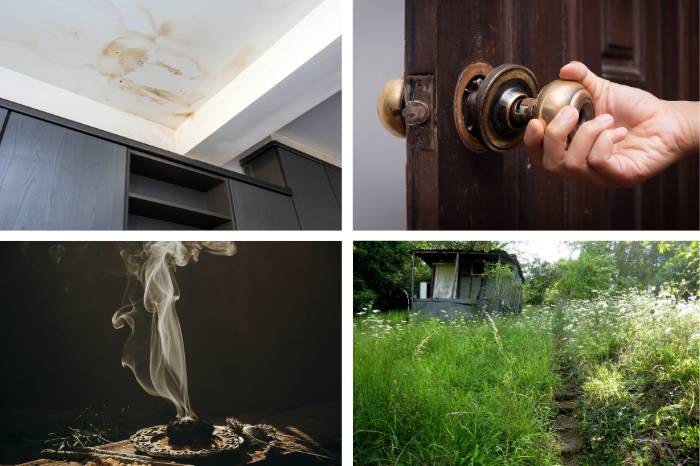
- Water stains on walls or ceilings
- Crumbling or bubbling plaster
Damp can result from poor ventilation, leaking roofs, rising damp, or faulty plumbing – all of which can be expensive to remedy.

Roof Problems
Check for missing or slipped tiles, excessive moss, or signs of an ageing roof. If possible, look inside the loft: daylight coming through the roof covering is a major red flag. Roof replacements can run into tens of thousands of pounds.
Windows and Doors
Ill-fitting, drafty, or damaged windows and doors can signal poor maintenance, structural movement, or outdated installations. They also affect energy efficiency and security.
Strong Smells and Air Fresheners
Be cautious if a property smells strongly of air freshener or incense. This can sometimes be used to mask:
- Mould or damp
- Smoke damage
- Pet odours
- Drainage or sewer problems
Multiple buyers report properties where incense was clearly covering an underlying issue.
Signs of Pests
Droppings, gnawed wood, or unusual noises may indicate rodents or other infestations. Left untreated, pests can cause structural damage and health concerns.
Overgrown Gardens
An unkempt garden can hide drainage issues, boundary problems, or even structural defects. It may also indicate general neglect of the property.
Hidden and High-Risk Issues
Asbestos
Older properties – particularly garages, basements, and outbuildings – may contain hidden asbestos. While not always dangerous if undisturbed, removal is costly and tightly regulated in the UK.
Invasive Plants
Japanese knotweed is well known, but bamboo is increasingly becoming a serious concern. These plants can damage foundations and significantly affect mortgageability. Always ask whether the property has current or historic issues with invasive species and consider a specialist survey if there is any doubt.
Unauthorised Land or Extensions
A major red flag is where a seller has extended a garden or altered boundaries into land they do not legally own, or without proper planning permission or land enquiries. Even with indemnity insurance, this can create serious legal and resale issues and is often best avoided.
Energy Efficiency Red Flags
Always check the property’s Energy Performance Certificate (EPC). A low energy rating often means:
- Higher heating and energy bills
- Poor insulation
- Single glazing or outdated systems
Ask whether the property has energy-saving features such as double glazing, cavity wall insulation, or loft insulation. If not, factor in the cost of upgrades.
Covert and Behavioural Red Flags
Some of the biggest warning signs have nothing to do with the building itself.
Short-Term Ownership
If the seller has lived in the property for two years or less, ask why they are moving. There may be a genuine reason, but it could also indicate problems with the property or the area.
Frequent Changes of Ownership
A property that has changed hands several times in a short period may have underlying issues that cause buyers to move on quickly.
Vendor Retaining Nearby Land
If the seller is keeping hold of adjacent land, this may suggest future development or planning applications that could affect your views, privacy, or enjoyment of the property.
Property on the Market for a Long Time
A home that has been listed for an unusually long period or with multiple agents may indicate:
- Failed surveys
- Legal issues
- Unrealistic pricing
- Problems uncovered by previous buyers
Restrictive Viewing Arrangements
If the seller insists on viewings only at certain times of day, ask why. They may be trying to hide:
- Traffic noise
- Neighbourhood disturbances
- Smells from nearby businesses or farms
It’s often wise to visit the area at different times independently.
Literal Signs in the Area
Signs such as “No Parking” or “No Ball Games” can reveal a lot about the neighbourhood. This may suit some buyers, but could be a concern for families or those wanting a more relaxed environment.
Shared Driveways and Parking
Shared access arrangements are a common source of neighbour disputes. Clarify boundaries, rights of way, and how previous owners managed the arrangement.
Selling Due to Divorce
Buying from a divorcing couple is not necessarily a red flag, but it can increase the risk of delays and disagreements. Be prepared for a potentially slower transaction.

Why Surveys and Legal Checks Matter
Many red flags are not obvious during a viewing. A professional survey can uncover issues such as:
- Structural movement
- Damp and timber defects
- Asbestos
- Invasive plants
Equally important are thorough legal checks to confirm boundaries, planning permissions, rights of way, and land ownership. These steps can save you thousands of pounds and significant stress in the long run.
When buying a house, trust your instincts but always back them up with professional advice. Red flags don’t always mean you should walk away, but they do mean you should investigate further, renegotiate, or reconsider whether the property is right for you.
In the UK property market, the key is diligence. Ask questions, visit more than once, review surveys carefully, and ensure your legal advisers dig into the details. Spotting red flags early can make the difference between a confident purchase and an expensive mistake.
-
What Is Conveyancing? A Simple Guide for First-Time Buyers

-
What is a gifted deposit and what proof is needed?

-
Buying a Property with a sitting tenant: legal risks, rights & what buyers must know

-
Why You Should Transfer Property Portfolio to a Limited Company

-
What Goes in an Auction Legal Pack?

-
What is an LPE1 Form?

-
What Is a Completion Statement?

-
Autumn Budget 2025 – What could it mean for the UK property market?

-
The Renters’ Rights Act 2025: Why Landlords Need to Take Notice

-
Where to Buy an Auction Property